
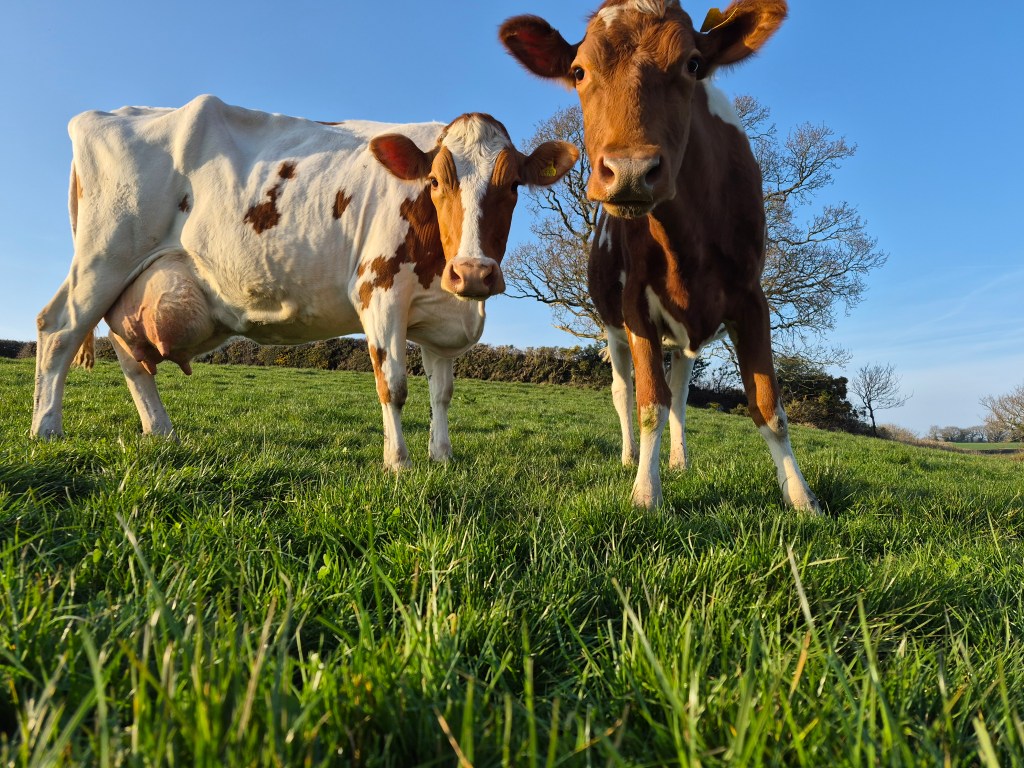
Here at Higher Murchington Farm this year has been our shortest winter housing period ever. Historically we would aim to have the cows out grazing the fields in the day by March 31st at the latest- then out day and night a week or two later. This year the cows went out on the 3rd of March and are now out all of the time. They love to be out in the fields and it feels like a joyous time of year. It means less winter work for us, less spreading straw, less feeding, and less work in the parlour as the cows stay cleaner.
The shoulders of the year in spring and autumn are always my favourite but it is also the time when the effects of climate change can seem more apparent. It has got me thinking about how we can be more adaptive and resilient to changing weather patterns in the future.
In this case we are able to have a longer grazing season which is beneficial. Yet we still seem to have used the same amount of straw bedding, silage and hay as usual-despite the cows having been housed for a shorter period.
We were lucky enough to have plenty of hay and silage to feed the cows over the winter but nationally the dry summer last year has meant these preserved feeds are in short supply and very expensive.
At the Apricot centre we have been learning about the core principles of regenerative farming and how they can help us meet some of the challenges facing us. Namely climate change mitigation and adaptation, offsetting biodiversity loss and importantly still producing enough food for everyone.
We have been talking about some of the principles of agroecological or regenerative farming and how using them can help us meet some of these challenges. The principles include:
- Improving soil health
- Making efficient use of water
- Sustaining and improving functional biodiversity
- Protecting and enhancing soil carbon and carbon sequestration
- Creating an equitable approach to the social and economic aspects of producing food
- Developing local marketing systems
- Promoting food security and shortening supply chains
A lot to take in, for you and for me! From time to time we can take a deep dive into some of these principles and what they mean in practice. I would love to hear the ways in which you are noticing changes in the progression or timing of spring. Maybe in your gardens, farms or on your walks.
Enjoy the sunny weekend
 graniteandgraze.co.uk
Leave a comment